Phone calls remain one of the most direct ways customers connect with businesses. The challenge? Traditional call centers are often costly, hard to scale, and can leave callers frustrated. AI for phone calls changes this completely, giving companies the ability to manage high volumes efficiently while scaling customer support without adding stress to their teams.
Many organizations are turning to advanced computing solutions for handling customer calls to make every conversation faster and smarter. By combining these tools with AI-driven communication strategies, businesses can turn each interaction into an opportunity to improve satisfaction, increase revenue, and lower operational costs.
Partnering with high-performance supercomputer providers can also improve processing speed and accuracy, ensuring calls run smoothly. Alongside this, implementing effective marketing strategies for customer engagement helps maximize the impact of AI phone systems.
Some teams leverage AI-driven marketing runners for integrated campaigns to connect phone interactions with broader outreach efforts. Meanwhile, checking top financial resources for tech investments can guide smarter decisions when adopting AI technology. With these solutions, growing your support capabilities becomes simpler, faster, and more cost-effective than ever.
This guide walks you through what AI phone technology is, how it works, the biggest benefits, and practical ways to roll it out in your business.
Top 10 AI Contact Center Solutions for Smarter Phone Calls
Managing customer interactions efficiently is critical for modern businesses. AI-powered contact center solutions help streamline operations, improve customer satisfaction, and reduce costs. Here’s a look at the top solutions in the market for AI for phone calls.
1. Bright Pattern – AI Contact Center Solutions
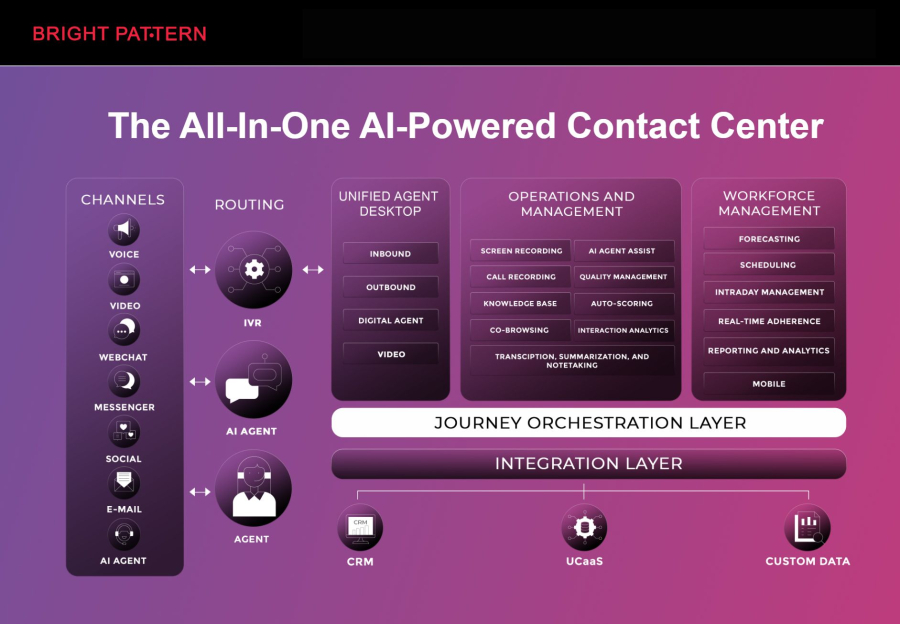
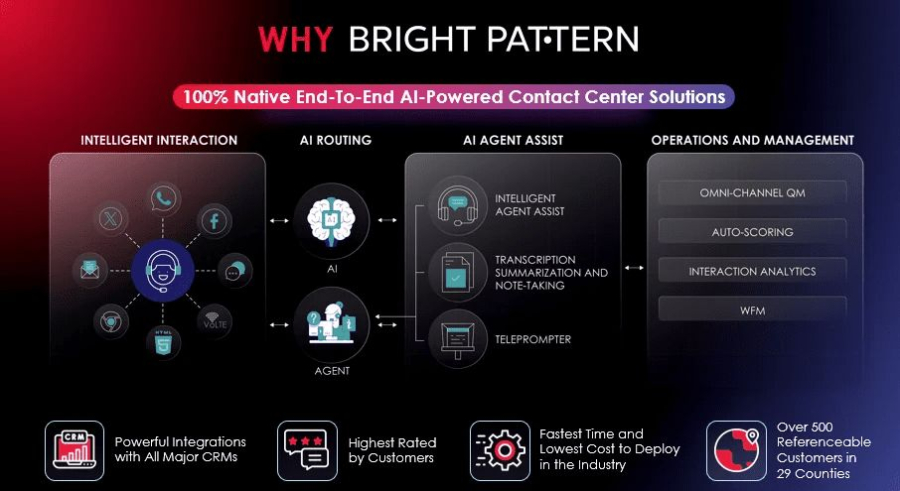
Bright Pattern stands out as a leading AI contact center solution, offering advanced features for businesses looking to optimize phone-based interactions. Their platform enables seamless integration with multiple communication channels while keeping phone calls efficient and effective.
Key benefits of Bright Pattern:
- Intelligent call routing that ensures customers reach the right agent quickly
- Real-time AI assistance to support agents during calls
- Automated workflows to reduce repetitive tasks and improve efficiency
- Analytics and reporting tools for insights into call performance
- Easy integration with CRM and business systems
With these features, Bright Pattern empowers businesses to handle high call volumes, improve customer experiences, and increase operational efficiency, making it an ideal solution for AI for phone calls.
2. Five9 – Cloud Contact Center Platform
Five9 provides a cloud-based platform that simplifies contact center management. Its AI tools help optimize phone call routing, automate follow-ups, and enhance customer interactions.
3. Genesys – AI-Powered Customer Experience
Genesys offers AI-driven solutions for personalized customer interactions. The platform combines voice, chat, and messaging with advanced analytics to improve agent efficiency.
4. Talkdesk – Intelligent Call Center Software
Talkdesk delivers AI-powered call center solutions with features like automated call distribution, speech analytics, and virtual agents to improve service quality.
5. RingCentral – Unified Contact Center
RingCentral provides an integrated contact center platform with AI features for predictive call routing, real-time agent guidance, and performance analytics.
6. NICE inContact – Cloud Customer Experience
NICE inContact leverages AI to optimize call handling, improve agent productivity, and enhance the customer journey across phone and digital channels.
7. 8x8 – AI Contact Center Solutions
8x8 offers AI-driven contact center tools for voice, chat, and email. The platform focuses on improving response times and providing actionable insights to managers.
8. Amazon Connect – Cloud-Based Contact Center
Amazon Connect allows businesses to create AI-powered contact centers in the cloud, with features like natural language understanding for smarter phone call interactions.
9. Zendesk – AI Customer Service Platform
Zendesk combines phone, chat, and email support with AI tools that assist agents in delivering faster and more accurate solutions.
10. Freshdesk Contact Center – AI Assistance for Calls
Freshdesk Contact Center provides AI-driven call routing, automated follow-ups, and analytics to improve call center performance and customer satisfaction.
What Is AI for Phone Calls?
AI for phone callsrefers to software that uses technologies like speech recognition, natural language understanding, and automation to handle or assist with voice calls. Instead of relying only on human agents or rigid keypad-based IVR menus, AI systems can understand spoken language, respond conversationally, and complete tasks over the phone.
These systems might take several forms, including:
- AI voice agentsthat have natural conversations to answer questions, qualify leads, or schedule appointments.
- Smart IVRthat lets callers say what they need in their own words instead of “Press 1, press 2.”
- Agent assist toolsthat listen in the background, surface real-time suggestions, and auto-generate call notes.
- Analytics enginesthat transcribe, categorize, and score calls for quality, compliance, and insights.
The goal is not just to replace human agents, but toaugmentthem and redesign the phone experience so it is faster, friendlier, and more efficient for everyone.
Key Benefits of AI-Powered Phone Calls
When done right, AI for phone calls delivers wins across customer experience, revenue, and operations.
1. 24/7 Availability Without 24/7 Staffing
Customers expect help at any hour. WithAI phone agents, you can provide:
- Instant answers to common questions outside business hours.
- Self-service flows for account info, order status, and basic troubleshooting.
- Overflow handling during peak times so callers are not left on hold.
This keeps your brand “always on” without requiring overnight shifts or constant hiring.
2. Effortless Scalability During Spikes
Seasonal demand, product launches, and unexpected incidents can create huge call spikes. Traditional call centers struggle to ramp quickly, but AI can scale up in minutes.
- Handle thousands of simultaneous calls with consistent quality.
- Protect human agents from overwhelming queues.
- Maintain service levels even when demand is unpredictable.
3. Better Customer Experience and Shorter Wait Times
Long hold times and confusing menus are top reasons for customer frustration. AI phone systems help by:
- Letting callers say what they need in natural language.
- Routing them directly to the right resource or human agent.
- Answering simple questions immediately, without waiting at all.
The result:shorter calls, fewer transfers, and happier customerswho feel heard and helped.
4. Higher Agent Productivity
Human agents are most valuable when they are solving complex, relationship-driven issues. AI removes the repetitive work that holds them back.
- Automatically handles routine, low-value calls.
- Pre-fills context from prior interactions and data sources.
- Generates summaries and action items so agents do less typing.
This means agents spend more time on high-impact conversations and less time on manual tasks.
5. Rich Data and Actionable Insights From Every Call
Traditional phone calls are hard to measure at scale. With AI, every conversation becomes structured data:
- Automatic transcription of calls into text.
- Tagging of topics, issues, products, and intents.
- Detection of sentiment trends and escalation triggers.
These insights help you improve products, refine scripts, train teams, and identify revenue opportunities you would otherwise miss.
6. Consistency, Compliance, and Reduced Errors
AI follows the rules it is given, every single time. This is especially valuable in regulated or high-risk environments.
- Ensure required disclosures and disclaimers are always delivered.
- Guide agents with on-screen prompts for sensitive situations.
- Reduce the risk of miscommunication and missed steps.
The result is more consistent service and lower compliance risk.
7. Cost Efficiency Without Sacrificing Quality
Because AI can handle a large share of routine interactions, you can serve more customers without increasing headcount at the same pace.
- Lower cost per call by automating repetitive tasks.
- Reduce overtime and emergency staffing during spikes.
- Reinvest savings into training and supporting your human team.
Over time, many organizations find thatAI for phone calls turns a cost center into a strategic assetthat supports growth.
Core Capabilities to Look For in AI Phone Solutions
Not all AI phone systems are created equal. When evaluating options, look for capabilities that directly support your goals.
Natural Language Understanding (NLU)
NLU enables the system to understand what callers say in their own words. Instead of forcing callers to adapt to rigid menus, NLU lets them simply speak their intent, such as “I want to change my reservation” or “I need to update my payment method.”
High-quality NLU should handle:
- Different accents and speech patterns.
- Background noise to a reasonable extent.
- Synonyms and varied phrasing for the same request.
Speech-to-Text and Text-to-Speech
Two core technologies power AI phone interactions:
- Speech-to-text (STT)converts what the caller says into text the AI can process.
- Text-to-speech (TTS)converts the AI’s response into a natural-sounding voice.
Modern systems offer multiple voice options and increasingly human-like prosody, making the experience feel more natural and less “robotic.”
Smart Routing and Intelligent IVR
AI can listen to the caller’s request and route them to the best outcome automatically, whether that is a self-service flow or a specific human agent.
- Route by intent, language, or priority level.
- Use context like customer history or account type.
- Skip unnecessary transfers by getting it right the first time.
Automatic Call Summaries and CRM Updates
After a call, AI can generate a concise summary of what happened and log it in your systems.
- Key issues discussed and resolutions provided.
- Follow-up tasks, commitments, and deadlines.
- Relevant tags or fields for segmentation and reporting.
This reduces administrative work and ensures that future interactions start with full context.
Sentiment Analysis and Quality Monitoring
Sentiment analysis detects emotional tone during and after calls. Combined with quality scoring models, it lets you:
- Identify calls where customers may be upset or at risk of churning.
- Spot coaching opportunities for agents.
- Track satisfaction trends over time by product, region, or campaign.
Outbound Campaigns and Intelligent Follow-Ups
AI can poweroutbound phone campaignsthat feel personalized, not robotic. For example:
- Warm follow-ups on quotes, demos, or trial sign-ups.
- Automated reminders for appointments, renewals, or payments.
- Proactive outreach to high-intent leads based on behavior.
Because AI can call at scale and respect preferences and rules, it helps teams reach more people with less manual effort.
Use Cases for AI in Phone Calls Across the Customer Journey
AI phone technology can add value at every stage of the customer lifecycle, from first contact to renewal.
Lead Qualification and Sales
Sales teams often lose time on unqualified leads. AI voice agents can:
- Call new leads quickly to confirm interest and gather basic information.
- Ask qualifying questions and capture responses in your systems.
- Route high-potential prospects directly to a sales representative.
This improves speed to lead, ensures fast follow-up, and helps sales teams focus on the right opportunities.
Customer Support and Self-Service
In support environments, AI can deflect a significant portion of repetitive inquiries, such as:
- Order status and tracking information.
- Password resets or account access issues.
- Basic troubleshooting or “how to” guidance.
For more complex cases, AI gathers details up front and then transfers to a human agent with full context, reducing handle time and improving resolution rates.
Appointment Scheduling and Reminders
From healthcare to home services, many businesses rely on scheduled visits. AI phone systems can:
- Allow customers to book, confirm, or reschedule appointments over the phone.
- Send automated reminder calls to reduce no-shows.
- Offer waitlist or earlier slot options when cancellations occur.
Payments, Renewals, and Collections
When handled sensitively and efficiently, payment-related calls can protect revenue and build trust. AI can assist by:
- Guiding customers through secure payment flows using keypads or authenticated channels.
- Providing clear information about balances, due dates, and options.
- Automating reminders for upcoming renewals or overdue invoices.
Internal Help Desks and IT Support
AI for phone calls is not just for external customers. Internal teams also benefit when repetitive requests are automated.
- Employee password resets and access requests.
- IT issue triage and ticket creation.
- HR inquiries about policies, benefits, or payroll schedules.
This frees internal specialists to focus on more strategic initiatives while employees still receive fast, consistent help.
AI for Phone Calls vs Traditional Call Handling
The table below summarizes how AI-driven phone experiences compare with traditional approaches.
| Aspect | Traditional Call Handling | AI-Powered Call Handling |
| Availability | Limited to staffed hours; costly to run 24/7. | Always on; can serve callers at any time. |
| Scalability | Requires hiring, training, and scheduling more agents. | Scales up or down quickly with demand. |
| Customer Experience | Often long queues and rigid IVR menus. | Natural language, faster routing, and instant responses for common needs. |
| Data and Insights | Limited call sampling and manual reporting. | Full transcripts, analytics, and sentiment data from every call. |
| Consistency | Varies by agent, shift, and workload. | Standardized flows and responses; rule-based compliance. |
| Agent Workload | Agents handle all calls, including repetitive ones. | AI deflects routine tasks, leaving agents focused on complex issues. |
| Cost Structure | Mostly variable labor costs tied to volume. | More predictable costs with automation handling a share of volume. |
How to Successfully Implement AI for Phone Calls
To unlock the full value of AI on the phone channel, it helps to follow a structured rollout strategy.
1. Define Clear Goals and Metrics
Before selecting technology, decide what success looks like for your business. Common goals include:
- Reducing average handle time or hold time.
- Increasing first call resolution.
- Deflecting a percentage of routine calls to self-service.
- Improving customer satisfaction or net promoter scores.
Clear metrics keep your implementation focused and make it easier to demonstrate return on investment.
2. Map High-Volume, High-Impact Call Types
AI adoption works best when you start where it can have the biggest impact. Analyze call logs and identify:
- Frequently asked questions that are repetitive and predictable.
- Processes with clear, rules-based steps (for example, status checks or policy information).
- Calls that require data lookups but not complex judgment.
These are ideal candidates for early automation.
3. Start With a Hybrid Model: AI Plus Human Agents
In many organizations, the best first step is ahybrid approachwhere AI handles parts of the call and human agents handle the rest.
- AI greets callers, identifies their needs, and gathers initial details.
- Complex or sensitive issues are quickly routed to a person.
- AI remains in the background to assist with information and summaries.
This approach minimizes risk, builds team confidence, and gives you real-world data to refine your strategy.
4. Design Conversation Flows Specifically for Voice
Voice interactions are different from chat or email. When designing AI call flows:
- Keep prompts short and clear so callers are not overwhelmed.
- Offer simple options when needed, such as repeating or confirming information.
- Plan for interruptions and corrections, because callers will talk naturally.
A well-designed voice experience feels intuitive, even for first-time callers.
5. Integrate With Your Existing Systems
To deliver real value, AI calls should connect with the systems you already use, such as customer databases, booking tools, or ticketing platforms.
- Pull customer details so callers do not need to repeat information.
- Update records automatically after each interaction.
- Trigger workflows, tickets, or notifications based on outcomes.
Integration turns AI from a standalone tool into a core part of your customer operations.
6. Train, Test, and Continuously Improve
AI for phone calls improves over time as it encounters more real-world conversations.
- Review transcripts to see where callers get stuck.
- Adjust prompts, flows, and training data regularly.
- Involve frontline teams in sharing feedback and suggested improvements.
A culture of iteration ensures your AI remains aligned with changing customer needs and business priorities.
7. Measure What Matters and Share the Wins
Track the impact of AI across your key metrics and make results visible across the organization.
- Time savings for agents and managers.
- Improvement in service levels during peak times.
- Customer feedback about shorter waits and faster answers.
Highlighting positive outcomes helps secure ongoing support and funding for further AI initiatives.
Best Practices for a Great Caller Experience With AI
To make AI-powered phone calls feel natural and helpful, keep these best practices in mind.
Use a Friendly, Clear Voice
Choose a voice profile that matches your brand and is easy to understand. Avoid overly fast speech, complex jargon, or long monologues.
Be Transparent About AI
Let callers know they are interacting with an automated system and provide easy ways to reach a human when needed. Transparency builds trust and sets expectations.
Offer an Easy Escape Hatch
Not every caller will want self-service. Make it easy to say “agent,” “representative,” or similar phrases to reach a person quickly, especially for urgent or sensitive topics.
Confirm Critical Information
For anything involving payments, personal data, or account changes, include confirmation steps so callers feel confident everything is correct.
Adapt to Caller Context
Where possible, recognize returning callers and adapt prompts accordingly. For example, if someone recently placed an order, you might prioritize shipping status in the menu logic.
Respect Privacy and Security
Handle personal and payment information carefully. Use secure flows and follow your organization’s privacy and data protection policies.
Frequently Asked Questions About AI for Phone Calls
Will AI phone systems replace human agents?
AI is most effective as acomplementto human agents, not a replacement. It excels at handling repetitive, predictable tasks and providing instant information. Human agents remain essential for complex, emotional, or high-value interactions. Together, they create a stronger service model than either one alone.
How accurate is AI at understanding callers?
Modern speech recognition and natural language systems can achieve high accuracy in many environments, especially for common phrases and well-defined tasks. Accuracy depends on factors like audio quality, accents, background noise, and how clearly flows and intents are designed. Ongoing training and refinement steadily improve performance.
Is AI for phone calls only for large enterprises?
No. While large enterprises were early adopters, many solutions are now accessible to small and mid-sized organizations as well. Because AI can reduce manual workload and extend coverage hours, it can be especially powerful for lean teams that want to grow without rapidly increasing headcount.
How long does it take to see results?
Time to value depends on scope. Simple use cases such as status checks or appointment reminders can show benefits quickly once deployed. More complex, multi-step flows take longer to design and refine but can unlock larger gains. Many organizations see meaningful improvements in call handling efficiency and customer satisfaction within the first few months of rollout.
Is AI for phone calls secure?
AI systems can be implemented in ways that support strong security and privacy practices. This includes encrypting data in transit and at rest, controlling access to call recordings and transcripts, and following relevant policies and regulations. As with any technology handling sensitive information, thoughtful design and governance are key.
The Future of Phone Conversations Is AI-Assisted
Phone calls are not going away. If anything, they are becomingmoreimportant as customers expect immediate, personal help across channels. AI for phone calls offers a powerful way to meet those expectations while keeping operations efficient and scalable.
By combining automation with human empathy and expertise, you can transform your phone channel from a cost burden into a strategic advantage that delights customers, empowers teams, and fuels business growth.
